How to Pick Your Base in China
Choosing a city in China is not like choosing between Lisbon and Barcelona. The differences here are massive -- climate, cost, language accessibility, food, nightlife, and internet infrastructure vary wildly from city to city. A month in Shenzhen feels like living in a sci-fi movie. A month in Dali feels like a yoga retreat in the mountains.
The five cities below represent the best options for remote workers right now, each with a distinct personality. Your ideal pick depends on your priorities: raw speed and tech access (Shenzhen), food and lifestyle (Chengdu), international comfort (Shanghai), budget and weather (Kunming), or nature and creative community (Dali). Many nomads city-hop between two or three of these, spending 2-4 weeks in each.
Shenzhen: China's Silicon Valley
Shenzhen is where you go if you want the fastest internet, the newest everything, and a tech scene that moves at hyperspeed. This city went from a fishing village to a megacity of 18 million in 40 years. The infrastructure is brand new -- every building has fiber, 5G blankets the entire city, and you can pay for everything with a face scan.
For digital nomads, Shenzhen's Nanshan district is the sweet spot. It is home to Tencent, DJI, and hundreds of startups, plus a dense cluster of coworking spaces and tech-forward cafes. The maker community around Huaqiangbei (the world's largest electronics market) is unmatched -- if you build hardware or tinker with electronics, this is your Mecca.
Pros: Best internet in China, massive tech community, modern apartments, easy access to Hong Kong (30 minutes by metro). Cons: The city lacks charm -- it is functional, not beautiful. Summer humidity is brutal. Less English spoken than Shanghai. Cost: Mid-range. Apartments in Nanshan run 3,500-6,000 CNY ($520-890). A meal out costs 30-60 CNY. Monthly budget: $1,000-1,400.
Chengdu: The Lifestyle Capital
If Shenzhen is the city that never stops, Chengdu is the city that knows when to sit down and eat hotpot. The capital of Sichuan province has become a magnet for young Chinese and expats who want great food, a relaxed pace, and affordable living. Locals have a word for it: anyi, meaning comfortable and carefree.
Chengdu's food scene alone justifies a stay. Sichuan hotpot, mapo tofu, dan dan noodles, street-side chuan chuan (skewers) -- you can eat like royalty for under $5 a meal. The cafe scene is enormous too, with hundreds of independent coffee shops in neighborhoods like Yulin and Tongzilin that welcome laptop workers.
The tech scene is growing. Chengdu is China's gaming industry hub, with studios from Tencent, NetEase, and dozens of indie developers. Coworking spaces are affordable at 30-50 CNY per day. The city is also a gateway to western China's mountains and national parks -- weekend trips to Jiuzhaigou or Mount Emei are easy.
Pros: Incredible food, low costs, relaxed vibe, strong cafe culture, easy nature access. Cons: Air quality can be poor in winter, less international than Shanghai, Sichuan dialect can be hard to understand even for Mandarin speakers. Cost: Budget-friendly. Apartments run 2,000-3,500 CNY ($300-520). Monthly budget: $800-1,100.
Shanghai: The International Hub
Shanghai is the obvious choice if you want maximum comfort, English accessibility, and a global social scene. The city has the largest expat community in China, with international restaurants, English-speaking coworking spaces, and a nightlife scene that competes with any world capital.
The Former French Concession (Xuhui district) is where most nomads end up. Tree-lined streets, beautiful architecture, walkable neighborhoods packed with cafes, wine bars, and boutique coworking spots. Jing'an district offers a more modern, central alternative with great metro access.
Shanghai's downside is cost. It is by far the most expensive city on this list. A decent one-bedroom in the French Concession runs 5,000-8,000 CNY ($740-1,190). Coffee costs more. Groceries cost more. Going out costs more. You are paying a premium for convenience and cosmopolitan energy.
Pros: Most English-friendly city, best international food scene, enormous expat community, excellent transit, world-class nightlife. Cons: Expensive by Chinese standards, summers are sweltering and humid, winters are cold and damp (no central heating south of the Yangtze). Cost: High for China. Monthly budget: $1,300-1,800.
Kunming: Eternal Spring on a Budget
Kunming is China's best-kept secret for long-term nomads. The capital of Yunnan province sits at 1,900 meters elevation, giving it mild weather year-round -- locals call it the Spring City. While everyone else sweats through Shanghai summers or shivers through Beijing winters, Kunming hovers around 20-25C with blue skies.
The city is cheap. Genuinely, impressively cheap. Apartments in decent neighborhoods like Cuihu (Green Lake) or Guandu run 1,500-2,500 CNY ($220-370). A bowl of Yunnan crossing-the-bridge noodles costs 15 CNY. The Dounan flower market sells roses for pennies. Your dollar stretches further here than almost anywhere in urban China.
Kunming's nomad infrastructure is less developed than the bigger cities. Coworking spaces exist but are fewer. The cafe scene is growing, anchored by local chains like Mango and independent spots around Wenlin Jie and the university district. Internet speeds are solid in newer buildings.
Pros: Perfect weather, extremely low cost, gateway to Southeast Asia (flights to Bangkok and Hanoi are cheap), clean air, friendly locals. Cons: Smaller city feel, fewer international amenities, limited nightlife, Mandarin spoken with a local accent. Cost: Very budget-friendly. Monthly budget: $700-1,000.
Dali: The Bohemian Mountain Retreat
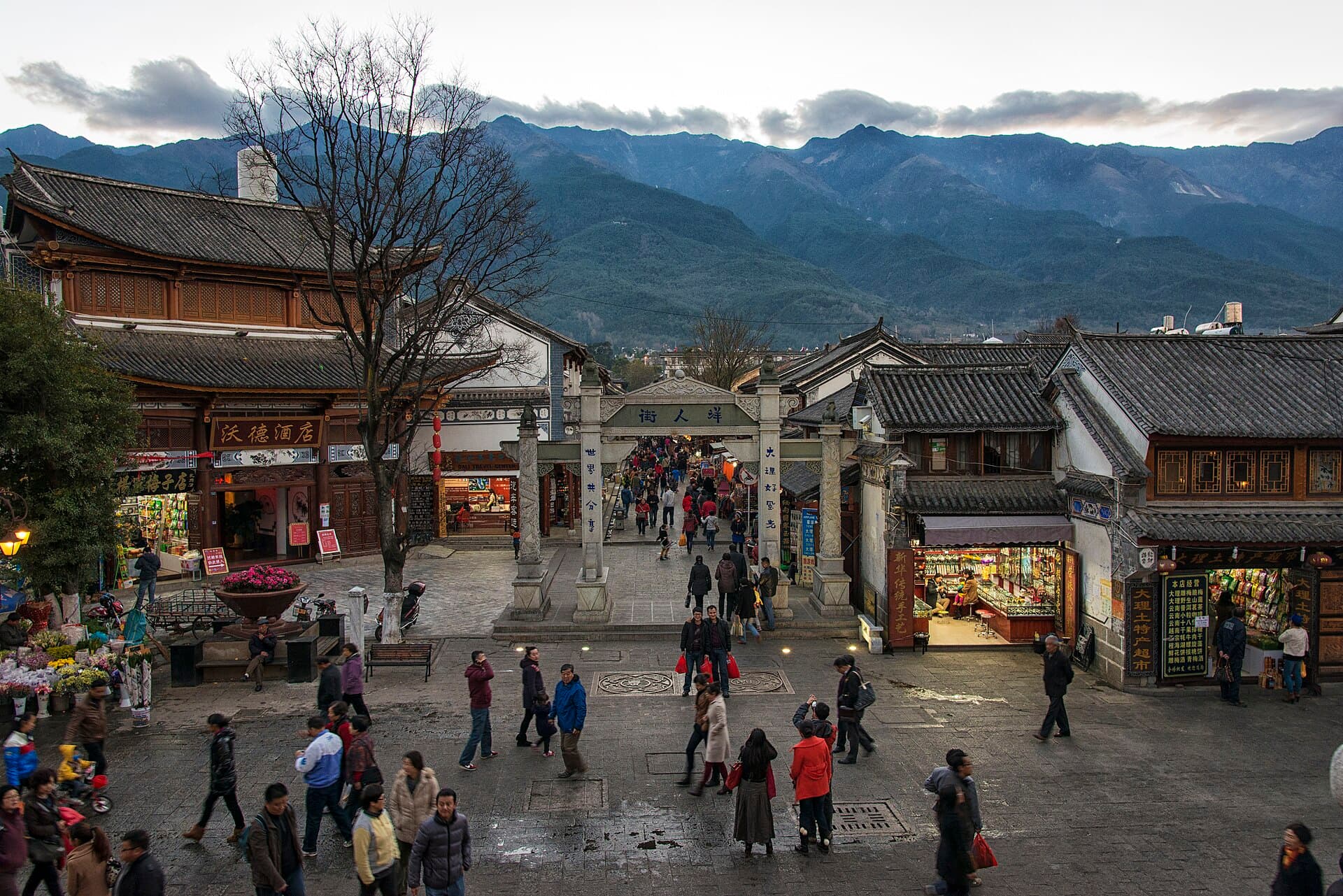
Dali is not a city in the traditional sense. It is a small ancient town on the shores of Erhai Lake, backed by the snow-capped Cangshan mountains in Yunnan province. It has become the spiritual home of China's dropout culture -- artists, writers, musicians, and remote workers who traded big-city hustle for mountain air and slow mornings.
The old town and surrounding villages are filled with guesthouses, communal living spaces, and tiny cafes where people work on laptops between hikes. The community is tight. Weekly events, open mics, art shows, and shared meals are common. If you want the closest thing to a Bali-style nomad community in China, this is it.
The tradeoffs are real. Internet is adequate but not blazing -- expect 50-100 Mbps in good guesthouses. There is no coworking chain presence. Getting here requires a flight to Kunming and then a 4-hour bus or 2-hour flight to Dali. Amenities are limited -- no international supermarkets, limited healthcare, and the nearest major hospital is in Kunming.
Pros: Stunning natural beauty, strong creative community, very cheap, clean air, unique lifestyle. Cons: Remote location, slower internet, limited infrastructure, can feel isolating long-term. Cost: Very cheap. Guesthouse rooms with workspace run 1,000-2,000 CNY ($150-300). Monthly budget: $600-900.